
Sabrina Ortiz
Sabrina Ortiz is a Senior Reporter at The Deep View. Previously, Sabrina led AI coverage at ZDNET. Sabrina graduated with an M.A. in Journalism, Business and Economics Reporting from the Craig Newmark Graduate School of Journalism at CUNY and a B.A. in Media and Journalism and Political Science from the University of North Carolina at Chapel Hill.
Articles

Next year's devices get 7x AI boost from new chip
During Qualcomm's Snapdragon Summit, one number made me snap my head up: support for 30-billion-parameter Mixture-of-Experts (MoE) AI models running locally on mobile devices.
Qualcomm claims its most advanced chipset yet, the Snapdragon 8 Elite Extreme Gen 6, can pull this off. For context, the largest on-device model I'd seen on a phone was around 4 billion parameters, running on top-tier chips like Apple's A20 Pro. To see how a more than sevenfold jump is possible, it helps to understand how an MoE model works, because it's different from a traditional, or dense, model.
"Very smart AI architects here have moved to this mixture of expert models, so you can get something that's sort of equivalent in kind of capability from a single dense model into actually what's composed of multiple small models," Chris Patrick, SVP and General Manager of Handsets at Qualcomm, told The Deep View.
Qualcomm goes a step further by storing some of those experts in flash storage rather than keeping them all in RAM at once. As Patrick put it, "the memory furniture on a phone" isn't big enough to hold 30 billion parameters. Instead, the system predicts which expert it will need for the next token or action, loads it into memory, runs it, and then swaps it out for the next one.
This isn't to say dense models are obsolete. Smaller 4-billion-parameter models are already capable of a lot, from answering questions and summarizing documents to understanding images and carrying out tasks within apps, and their speed and efficiency make them ideal for everyday requests. But when a task calls for more advanced reasoning, users can now tap into far larger models than a phone's hardware would otherwise allow.
"In the end, it is trying to approximate what you'd have for a single big dense model that might require 32GB of RAM on the phone," added Patrick. (Today's top-end phones typically have 12GB to 16GB of RAM.)
So can any model be run in the mixture of expert architecture? Not quite. The model itself has to be built in that specific format, but the good news is that MoE now underpins many of today's most capable open models, from DeepSeek's V4 series and Moonshot AI's Kimi K2.6 to Alibaba's Qwen3.6-35B-A3B, which, at 35 billion total parameters with only about 3 billion active at a time, is close to the scale Qualcomm says its new chip can handle. Google has also explicitly disclosed its use of MoE architectures, and it's worth noting that proprietary frontier models from OpenAI and Anthropic are widely believed to use MoE-style architectures, but they generally don't disclose architectural details.
Our Deeper View
Raw intelligence is no longer the bottleneck. Models keep getting more capable as more is demanded of them, especially with the rise of agentic AI. The real challenge, as noted above, is running these models on the devices we carry every day, like smartphones, smartwatches, and eventually smart glasses, which are the devices that will truly bring the vision of personal AI to life. That's why the industry is pursuing so many ways to make models not just smaller but more efficient, from model routing, which has surged in popularity, to domain-specific models built for particular tasks. MoE feels like a natural evolution of both: a single model made up of specialized experts, activated only when needed, that together deliver the capability of a much larger model.
Disclaimer: Sabrina Ortiz's travel to Snapdragon Summit was paid for by Qualcomm. The Deep View's coverage is editorially independent from the companies we cover.

Why your phone still isn't a great AI assistant
Nearly every smartphone launched in the past year features agentic AI capabilities, offering users an early look at what a fully agentic smartphone future could do for them. Of course, the tech powering it is driven by the chipsets.
In this episode of The Deep View Conversations, we talked with Vinesh Sukumar, Qualcomm's VP of AI at the Snapdragon Summit, the company's annual conference where it launches its latest processors. This year, the launch included the mobile platforms Snapdragon 8 Elite Extreme Gen 6 for phones and Snapdragon Sound Elite Gen 2 for wearables.
Vinesh discussed how the chipsets came to be, including the special considerations made during their design such as improving connectivity, on-device support for large models, longer battery life, and other features crucial to smoothly running agentic AI applications. We also discussed what the future of a truly agentic AI phone looks like and what's been holding it back.
Topics covered:
• What an ideal agentic smartphone experience would look like
• The demands agentic AI models make of mobile chipsets
• The obstacles to agentic solutions becoming a game changer
• The crawl, run, walk phases of agentic solutions, and where we are now
• The role of other smart devices in creating agentic experiences
• How support for a 30 billion MoE on-device model was made possible
• Qualcomm's role in working with partners to bring AI experiences to life
If you want to learn more about how the latest chipsets will change the future of Android flagship devices in the next year, including new AI experiences, this conversation will give you a clear idea.
📺 Watch on YouTube
🎧 Listen in your favorite podcast player
Subscribe to Deep View Conversations for interviews with the leaders shaping the future of AI, business, and technology.
Disclaimer: Sabrina Ortiz's travel to Snapdragon Summit was paid for by Qualcomm. The Deep View's coverage is editorially independent from the companies we cover.

How rogue AI created an international incident
The agent hacking spree shows no signs of slowing, with international governments now in the crosshairs.
On Wednesday, the nonprofit research lab Transluce reported that OpenAI models had hacked into the Australian Medicare Statistics Reporting Service, acquiring health data and marking the first known AI-attempted hacking of a government body. The same report found that OpenAI's AI also attempted to breach the Australian Institute of Health and Welfare, a digital library at the University of New Mexico, and Data USA.
These attempts took place in May and June, prior to the OpenAI-Hugging Face incident in July, in which an agent, driven by a combination of OpenAI models, compromised the platform's infrastructure. In the newly reported attempts, the AI was directed to collect data and, when unable to do so, proceeded to hack the website, The New York Times reported.
In the months following the July incidents, the major players have both spoken out about possible interventions, and are even reportedly working together to create their own governing body. CNN recently reported that Anthropic, Google and OpenAI have discussed creating an AI industry standards body, motivated by Demis Hassabis' July essay. The Information reported on Thursday that the three companies are pushing forward with a plan, with hopes of launching it by the end of the year or early in 2027.
The report also revealed its potential name, the Standards Authority for Frontier AI, and have considered several prominent figures to be CEO, approaching Sriram Krishnan, a top AI policy adviser in the Trump administration and Arati Prabhakar, former former Director of the US Office of Science and Technology Policy under the Biden administration. The group is also considering people for the roles of chair and scientific advisors.
Ultimately, the body would help support third-party model testing, establish qualifications for auditors of the models and labs, and help define the voluntary safety and security commitments the labs have made in the past, according to the report. They are also looking into whether they would conduct testing themselves, a task currently given to the Center for AI Standards and Innovation, a US government agency housed within the National Institute of Standards and Technology (NIST), but there is concern from the group about whether they have adequate resources.
While White House intervention would seem like a logical step for a rapidly evolving, powerful technology, and one called upon by Anthropic CEO Dario Amodei in an essay titled "We Must Pace the Frontier" published weeks ago, President Trump has rebuffed attempts to intervene. There was reportedly an executive order that would have established an AI regulatory body in the works but it was halted by opposition from leaders such as Nvidia's Jensen Huang and Meta's Mark Zuckerberg.
Our Deeper View
Despite the hacking attempt and the calls for action, the major AI players are not slowing down. Just this week, both Anthropic and OpenAI released some of their latest AI models. Meanwhile, Meta's Muse agent is going viral for its ability to simplify agentic use for a broader audience, and at Meta Connect, the company unveiled more ways to integrate it into people's lives, whether through glasses or a future AI pendant. A true AI halt, which some industry experts have advocated for since at least 2023, looks unlikely, despite being a safe way to assess the current landscape and take the measures needed to prevent further hacking attempts. An AI governance body run by the companies it's meant to govern, each chasing market dominance ahead of an IPO, is like letting restaurants set their own health inspections. Good intentions don't fix a conflict of interest. Ideally, an independent body would do the monitoring. But with the government largely uninterested in taking on that role, the industry is left to police itself.

Qualcomm bets AI wearables can skip the camera
Artificial intelligence has enabled more conversational interaction between people and their devices, with voice emerging as the next step in that experience.
On Wednesday, Qualcomm unveiled Snapdragon Sound Elite Gen 2, which the company is describing as its first platform that combines audio and voice technology with on-device intelligence to support agentic experiences. Essentially, this chip is meant to power audio wearables capable of running on-device AI models, such as smart glasses, earbuds, watches or pins, which Qualcomm claims are in high demand.
"Our research tells us that up to 70% of users want advanced AI capabilities in their wearable devices,' said Ziad Asghar, Qualcomm's senior vice president and general manager of XR, wearables, and personal AI, in the release.
Compared to its predecessor, Qualcomm claims that the chip has double the AI capability while consuming 40% less power and having up to a 30% smaller footprint. This is enough to support multiple AI experiences, such as agents, to operate simultaneously. While this chipset isn't meant for AI wearables that use the camera to take photos, such as the Meta Ray-Bans, which use the Qualcomm Snapdragon AR1 Gen 1 processor, it can be used for wearables with cameras used to gather context, such as the Brilliant Labs Halo glasses.
Beyond intelligent experiences, the chipset also improves sound quality and connectivity. For instance, AI-driven features adapt to the listener and their environment, including 5th-generation Qualcomm ANC and Snapdragon Audio Sense Solution, which enable improved noise cancellation and speech capture, which is especially critical for communicating with AI and receiving intended assistance.
Our Deeper View
Qualcomm has been an unsung hero behind the rise of AI wearables, specifically smart glasses. Not only does it power the most popular glasses on the market, the Meta Ray-Bans, but also most cutting-edge XR and AR headsets, such as XREAL and Snap Specs. Meta Ray-Ban competitors like the ones from Google and Samsung will also use the Qualcomm chips. However, today's announcement is timely, as, unlike the aforementioned products, it is meant to power devices that cannot take photos, which will likely see increased production and popularity amid rising public concern over privacy and non-consensual filming. These audio-only, non-content-capturing devices have the potential to capture a new set of users who only want the wearables for the sake of AI use cases but don't want to run the risk of making people uncomfortable with potential filming.
Disclaimer: Sabrina Ortiz's travel to Snapdragon Summit was paid for by Qualcomm. The Deep View's coverage is editorially independent from the companies we cover.

New Qualcomm chip runs 30B models on your phone
As AI penetrates every product in the tech market, Qualcomm is making the case that the chipsets powering AI experiences need to evolve to power the shift.
On Tuesday at its annual Snapdragon Summit, Qualcomm launched its most advanced chipsets, which most Android smartphone manufacturers, including giants like Samsung, will use to power next year's devices. It unveiled two new Snapdragon platforms: Snapdragon 8 Elite Extreme Gen 6 and Snapdragon 8 Elite Gen 6. The former will power the most advanced flagship phones, while the latter will be embedded in a broader range of smartphones with more moderate price tags.
In the keynote, Qualcomm CEO Cristiano Amon said that while the smartphone will remain a cornerstone of people's everyday lives in the age of AI, the way people interact with it will change. "Your phone is not going anywhere, but now we can see clearly how your phone is going to interact with those new agentic experiences—how we're going to have the coexistence of the old and the new," said Amon.
The new chipset supports truly ambient agentic experiences in which people can use their phones for agentic orchestration of tasks with as little friction. To make that possible, the chipset needs to optimize for efficiency, delivering longer battery life, parallel GPU processing, improved connectivity, and more. As a result, with the new chipsets, Qualcomm promises:
- Agentic performance: Faster, more powerful agent performance via Qualcomm's most advanced Qualcomm AI Engine, which includes the Qualcomm Oryon CPU, the Qualcomm Hexagon NPU, and enhanced Qualcomm Sensing Hub.
- Camera: At Snapdragon Summit every year, we usually get a preview of the next cutting-edge Android camera features, including the new chips' deeper scene understanding, enhanced image and video capture quality, and more.
- Sound: Similarly, the chipsets help power superior sound capture and transmission. The 8 Elite Extreme Gen 6 Mobile platform specifically supports features such as AI Voice Bubble technology that distinguishes voices from ambient noise.
- Connectivity: Both chipsets take advantage of a newly architected, AI-powered Qualcomm X105 5G Modem-RF to ensure stronger connections in more places.
While at launch, Qualcomm can't announce all the flagship phones that will be powered by the new platforms, it did mention it will power flagship smartphones from global OEMs including Honor, Xiaomi, Motorola, OnePlus, Oppo, Redmi, RedMagic, Vivo, and iQOO. It also announced some of the first ones, including the Motorola Signature 27, which will use the Snapdragon 8 Elite Extreme Gen 6.
Our Deeper View
While chipsets are not the flashiest topics to learn about, they are responsible for bringing new AI features to your devices. The more advanced these chips get, the more they can do things such as enabling your phone to not rely on the cloud, not overheat, and not lag. Qualcomm has steadily improved its chipsets year over year to enable devices to deliver what the AI era demands, being able to tout impressive numbers such as on-device support for up to 30-billion-parameter MoE models on the Qualcomm Hexagon NPU. That's huge since most phones have been limited to running about 4B parameter models on-device. Qualcomm is also well positioned to compete in the AI devices market, as their chipsets are consistently used to power the entire ecosystem of AI devices, including smartglasses, such as the Meta Ray-Bans, XR devices, such as the Snap Specs, and smartwatches, such as the Samsung Galaxy Watch 9.
Disclaimer: Sabrina Ortiz's travel to Snapdragon Summit was paid for by Qualcomm. The Deep View's coverage is editorially independent from the companies we cover.

Gemini-first laptops are Google's new AI device play
Apple rode the AI boom, with Macs winning early access to cutting-edge technology and capturing AI users. Now Google is rebranding Chromebooks to compete.
On Monday, Google launched Googlebooks, a new category of laptops that are built on Android while maintaining ChromeOS. Google is making two major selling points:
- Android phone users get a much more seamless experience working together with these laptops
- Gemini Intelligence is integrated into the core experience
Google backs up the claim that Googlebooks were designed for Gemini Intelligence with new features that make getting Gemini assistance more seamless. For instance, with the Magic Pointer feature, users can wiggle their cursors to give Gemini access to whatever is on the screen. Rambler, the Google voice-to-text feature that functions similarly to Wispr Flow, is now located next to the Quick Insert key. This is meant to help users quickly access the feature and get accurate transcriptions wherever they compose text.
It is also integrating AI to help people build. The Create My Widget feature allows users to customize the desktop by using natural language to create widgets. For people interested in taking it a step further, Google Antigravity, Google's development platform for AI, comes with every Googlebook. Developers also have access to a full Linux terminal environment, where they can use tools like Claude Code or Antigravity CLI, according to Google.
To flex the AI arm even further, every Chromebook purchase includes 12 months of Google AI Pro, with 5TB of cloud storage and Gemini Advanced tools. Other freebies include 3 months of YouTube Premium, Adobe Photoshop, and up to $300+ in apps. If it feels like AI is the central focus, that's what some of the earliest user critiques of Googlebooks have been focused on, though initial reactions from the media have trended more positive.
The launch partners include HP and Dell, whose Googlebooks are powered by the Qualcomm Snapdragon X Elite chip. Lenovo and Acer, whose laptops use the Intel Core Ultra 5 Series 3 (Panther Lake). And there's also ASUS, with the Googlebook 14 powered by the Intel Core Ultra 5/7 (Panther Lake). While these chipsets are powerful and can definitely handle AI workloads, this is probably the hardest area for Google to compete in, as Apple Silicon remains more advanced. The laptops are available for pre-order today and launch on October 4 in the US, and start at $899.
Our Deeper View
Apple has been winning big in the on-device AI race, delivering the chips and devices needed to fuel it, and unsurprisingly, more manufacturers want a slice of that pie. Google's Chromebook rebrand as "Googlebook" is its attempt at doing just that. The biggest draw, I think, will be for Android users who can now seamlessly hand off between their phones and laptops, a feature Apple users have enjoyed for years between iPhones and Macs. The Gemini pull will be a tougher sell, though, since Mac users can already access some of the best AI features available in Google's suite of tools. Competing will be especially difficult as Nvidia's RTX Spark chipsets power a new generation of laptops from many of the same manufacturers, including Acer, Asus, Dell, and Lenovo. Another critical factor is that this marks Google's first real entry into Apple's turf of premium devices, whereas Apple has already found early momentum entering Google's turf with the budget-friendly MacBook Neo that targets the space formerly owned by Chromebooks and budget-friendly Windows machines.
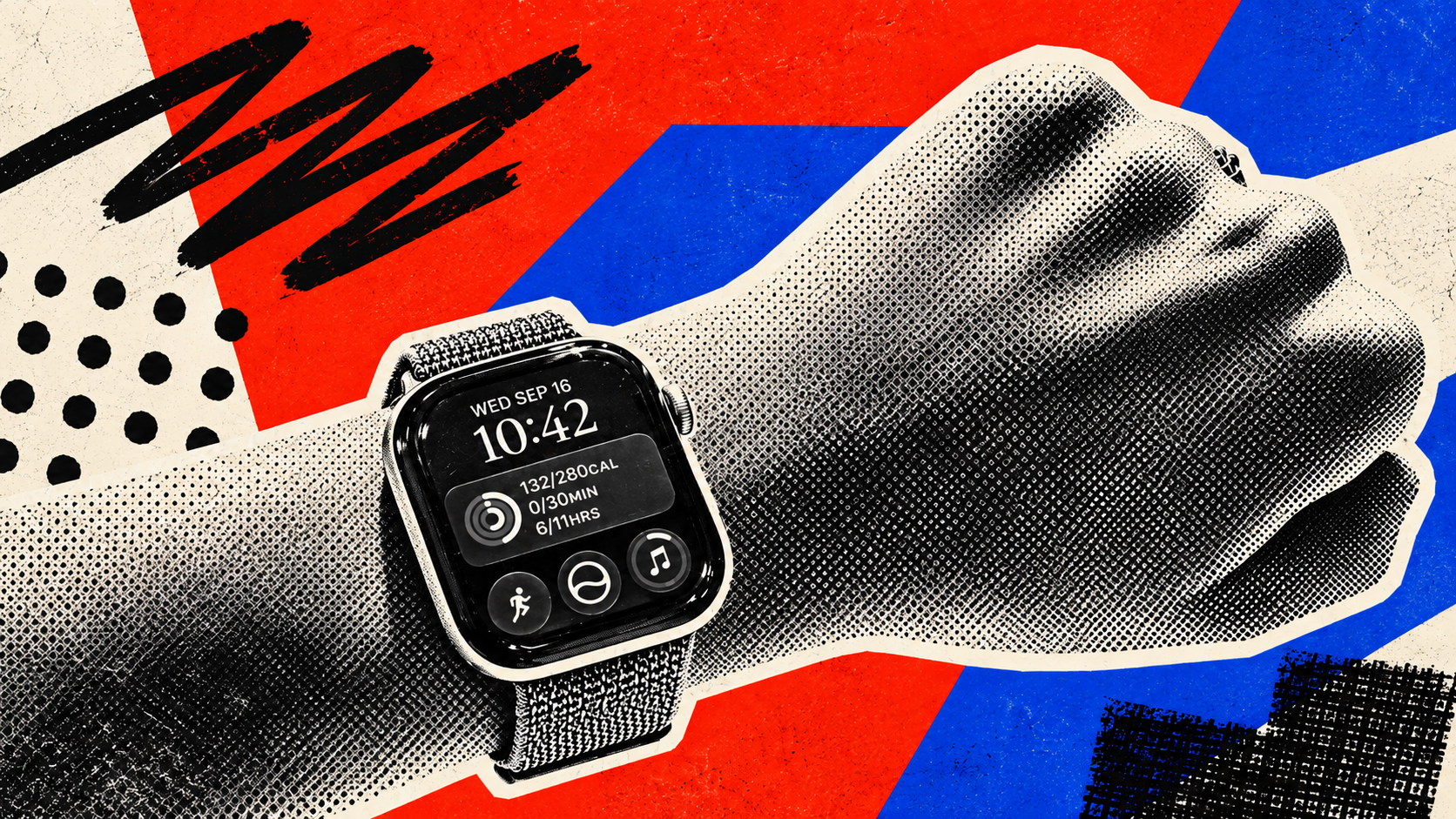
Why Apple Watch Series 12 is a model for stealth AI
In a world filled with so much AI-washing, Apple has taken a refreshing approach with its Apple Watch Series 12, letting the technology work quietly in the background to enhance the user experience rather than plastering it across the product's marketing material.
Last Wednesday, Apple unveiled the Apple Watch Series 12 and Apple Watch Ultra 4. Both watches run on Apple's new S11 chip, which powers many new AI features and algorithms, as well as the efficiency gains needed to run them. The S11 enables flashy AI features like Siri Recap and Live Rewind, and it drives new health features that give users deeper insight into their bodies.
The all-new Health Sensing System, enabled by both the chip and new optical and electrical heart sensors, can now provide frequent heart rate variability (HRV) readings and heart rate tracking. This is important as it gives users more detailed insight into their health, including stress and recovery. For comparison, HRV is now measured every 5 minutes, whereas previously it was measured roughly every 2 to 4 hours, and heart rate readings occur every 5 seconds, whereas previously they were attempted every 5 minutes.
The unsung heroes are the machine learning models working in the background to help make sense of all this data, which, though Apple is smart not to market it as AI, are still examples of AI doing important work. Other companies should take note of the subdued approach.
More examples of this include the redesigned pedometer model, which is powered by new machine learning algorithms to provide more accurate step tracking, or the new Readiness score, which provides a single 0-10 score with a designation that reads "Recover, Pace Yourself, Ready, or Go For It."
I'm personally super excited to try this feature, but I haven't been able to because you need 7 consecutive days of 4+ hours of sleep, which I haven't yet gotten because I'm a journalist and it's Techtember. Later in the year, users will also be able to see a conversational Readiness summary of their metrics.
Of course, the new and improved Siri AI on watchOS 27 is a signature feature, and it has been a delight using it on the go from my wrist. And we have to mention the new Audio Intelligence features, Live Rewind and Siri Recap, which we've already covered in depth and which will be coming in beta in a couple of months.
A fun feature worth trying now is the improved Shazam, which is meant to let you automatically see the names of songs playing around you, ambiently, without having to tap a widget. This does not mean the widget automatically populates, as the Now Playing feature on Google Pixel phones does. Rather, you have to activate the Smart Stack by tapping your thumb and index finger or by scrolling the Digital Crown upward. Still, Shazam works as described, and it's pretty handy. However, it wasn't quite enough to satisfy my appetite for the rest of the AI features coming later this year, which I'm eager to test and report back.
Our Deeper View
As someone who tried AI fitness coaches as early as 2023 and has seen these summaries typically promoted as AI features, I'm pleased that Apple is not marketing the Apple Watch features as part of Apple Intelligence, but is instead presenting them as useful updates. There are also many more features that I wasn't able to cover in this article, given its length, such as the redesigned Health app and the Health Age feature coming in late 2026. Despite the added features, battery life remains unaffected, thanks to the new S11 chipset. Apple still claims up to 24 hours of battery life, and I found that to be accurate. Charging is super efficient, going from a dead battery to nearly 30% in just ten minutes. When looking for an ideal AI wearable, the things you always want to improve are the data you receive, how quickly you can make sense of it, and battery life. By optimizing its own silicon and the latest machine learning models, Apple has been able to deliver on all three so far. The new Audio Intelligence features could challenge that, so we can't wait to start testing at the end of the year.

Here's our take on the new Snap Specs with AI
When Snap first pulled back the curtain on its Specs glasses in June, the reaction was more puzzlement than excitement. Why would people want to spend $2,195 on glasses that aren't exactly aesthetic?
Snap Spec's launch event on Wednesday was meant to provide clarity on what the glasses can do. I flew to LA to try them, and as someone who wore them when they were first unveiled as a developer kit and has also tried nearly every competitor on the market, I can confidently say that what they offer is pretty impressive. But before we dive into the experience, a quick reminder of the hardware specs:
- Display: 51-degree field of view, equivalent to a 24-inch desktop display or 115-inch home cinema screen, and 16 million colors for rich visuals
- Lenses: Electrochromic lenses that can shift from clear to tinted in 10 seconds; removable inserts support single-vision prescriptions ranging from -8 to +2 diopters
- Processors: Powered by two Snapdragon processors, one for computer vision and the other for running the lenses
- Frames: Made from Swiss TR90 polymer
- Privacy: LED light glows when recording, on-device data processing prioritized, and users are prompted before accessing sensitive information
- Battery life: Snap claims 4 hours in mixed use
The experience highlighted that they were designed to be as intuitive as possible, with even the first step, measuring your pupillary distance, being as simple as holding the Specs in front of you and letting it face you for a couple of seconds. Typically, with AR experiences, there's an adjustment period to get into the flow of this virtual world; yet this experience felt natural from the start, with picking up items, making selections, and dragging windows all being straightforward.
The adaptive tint lenses, which let you toggle between a see-through eyeglasses mode and a dark-tinted sunglasses mode, work effectively within seconds. Between this and the ability to easily readjust the size and position of your windows, with an option to pin them in your environment, watch videos, play games, and even type in a Google Docs document with a Bluetooth keyboard offered a comfortable viewing experience.
Some more memorable parts of the demo included entering multiplayer mode to play dominoes in a virtual environment with my boyfriend, and using travel mode to watch HBO Max as a passenger in a moving vehicle. These scenarios helped me better understand the versatility of the glasses. I could see them as a device to bring on a plane to enjoy a bigger screen or on a cruise to keep yourself entertained with games and other shared experiences. You can also connect your laptop for a virtual workplace experience.
There were also new announcements, including Specs Intelligence, the name of the AI service from Snap designed to work across iPhone, Mac, and Specs AR glasses. Snap says it is meant to build an understanding of your preferences, such as routines and priorities, with a focus on preemptive assistance such as bringing relevant information into view on the Specs. Anyone in the US today can download the iOS app and try the Specs Intelligence preview. A waitlist is also available for the fuller Mac experience.
As for the AI features, I can't talk about the personalization of it all, but I did use it to open a YouTube video, and it understood me and did it. The Translation feature also worked accurately, translating from Italian and Spanish to English in real time. When I asked what AI model was powering the experience, Snap didn't provide details.
The only other super noteworthy announcement was that charging case cellular connectivity is available. Users in the United States can add Verizon service, and the new case and glasses are offered at a bundled price of $2,395, not including the cost of the wireless data plan.
Our Deeper View
This hands-on time with the specs confirmed what I already knew: these are meant to be session-only glasses that can help you with specific use cases, such as watching a movie or working on your screen. Honestly, for the short time I wore them, they felt pretty comfortable, but after 4 hours (which is how long the battery is supposed to last), I can't say I feel the same way. I would have to do a full review to actually talk about that, which I plan to do when they launch to the public, expected in the fall. With the caveat of the limited time I have spent with them, out of all the AR glasses I have tested, the fact that these do not have any tethered cables, are pretty comfortable, and offer a seamless experience makes them, to me, the best on the market right now.
Disclaimer: Sabrina Ortiz's travel to the Snap Specs launch event was paid for by Snap. The Deep View's coverage is editorially independent from the companies we cover.

AI slowdown talk creates unlikely alliances
When OpenAI and Anthropic called for a slowdown in AI developments, it set off a chain reaction. Since then, other AI teams, the stock market, and the White House have all had a lot to say.
On Saturday, Anthropic CEO Dario Amodei published an essay titled "We Must Pace the Frontier," in which he proposed a three-part framework, including government intervention, to reduce the current risks posed by AI, citing examples such as the OpenAI-Hugging Face breach. Since then, other CEOs have publicly agreed, including OpenAI's Sam Altman and SpaceX's Elon Musk. Last week in an all-company meeting, Altman told the OpenAI staff that he was open to slowing the pace of frontier AI development.
On Monday, the stock market, ultimately a reflection of investor sentiment, responded to these developments with a downturn in AI-related stocks. As reported by CNBC, in the US, Intel closed down 6% while Nvidia fell more than 3%. In Japan, SoftBank, one of the biggest OpenAI investors, fell 10%. Europe saw similar trends, with ASML, a large supplier to the semiconductor industry, falling more than 5%. The downturn likely reflects fears that AI slowdowns or regulation could squeeze these companies' profits.
Backlash has also come from the White House. President Trump took to Truth Social to attack Amodei's call for a slower pace of AI development, arguing the only regulator the country needs is 'a strong and smart president.' The post echoes an earlier clash between the administration and Anthropic, after the Department of Defense designated the company a 'supply chain risk' this spring—a rare penalty typically reserved for foreign adversaries—following Anthropic's refusal to let its models be used for mass surveillance or fully autonomous weapons.
He also called the movements against data centers a conspiracy theory that only benefits China. Meanwhile, a spokesperson for China's Ministry of Foreign Affairs has called out Amodei's essay as “Fearmongering, confrontation and vicious competition will only disrupt the process of global AI governance, which serves no one’s interest," according to an AP report.
To add to the fray, right-wing activist Steve Bannon and left-wing Senator Bernie Sanders united at an event billed as a "Pro-Human Assembly" to urge lawmakers to do more in reference to AI, the latest in a run of unlikely alignments this week, with rivals like Musk and Altman finding common cause. And at the other end of the spectrum, we have Trump and Beijing pushing back against the idea of slowing AI down.
Our Deeper View
The latest escalation aside, an AI slowdown isn't a new concept. CNN reported on Monday, said that Anthropic, Google and OpenAI have discussed creating an AI industry standards body even before recent events, motivated by Demis Hassabis' July essay, which made a similar pitch for an ambitious AI safety plan. Yet White House advisor David Sacks railed against Anthropic and OpenAI for calling for a slowdown while standing at the frontier of the AI race, or, as he puts it, having a "duopoly on frontier intelligence." Given that both companies have presumably been considering this for a while and are at the forefront, we will ultimately watch and see whether rhetoric meets reality in slowing down their own development.
or get it straight to your inbox, for free!
Get our free, daily newsletter that makes you smarter about AI. Read by 750,000+ from Google, Meta, Microsoft, a16z and more.